The AI Traffic Your Credit Union Already Gets Is Hiding in Direct
AI assistants sent finance sites 19M visits a month, up 236%. Most credit union analytics file those visits as direct. Here is how to find them.
AI assistants sent finance sites 19M visits a month, up 236%. Most credit union analytics file those visits as direct. Here is how to find them.
The new Search Console report is the first free look at AI visibility, and its blind spots say as much as its numbers.
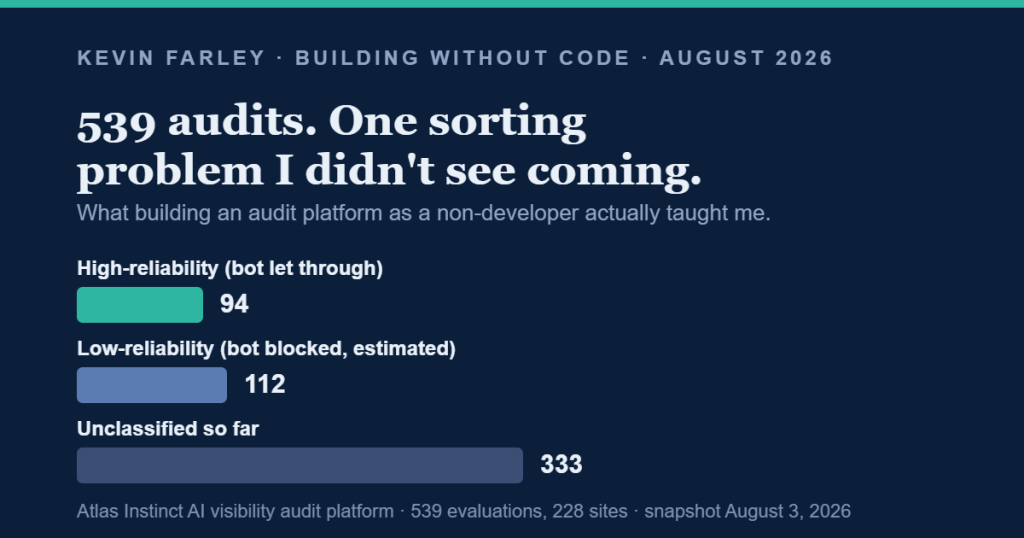
I’m not an engineer. Here’s how I built an AI visibility audit platform anyway, what broke, and what 539 audits taught me about bot-blocking.

Notified studied 8,000 press releases and found the average time to first AI citation was eight hours. What that means for bank and credit union announcements.
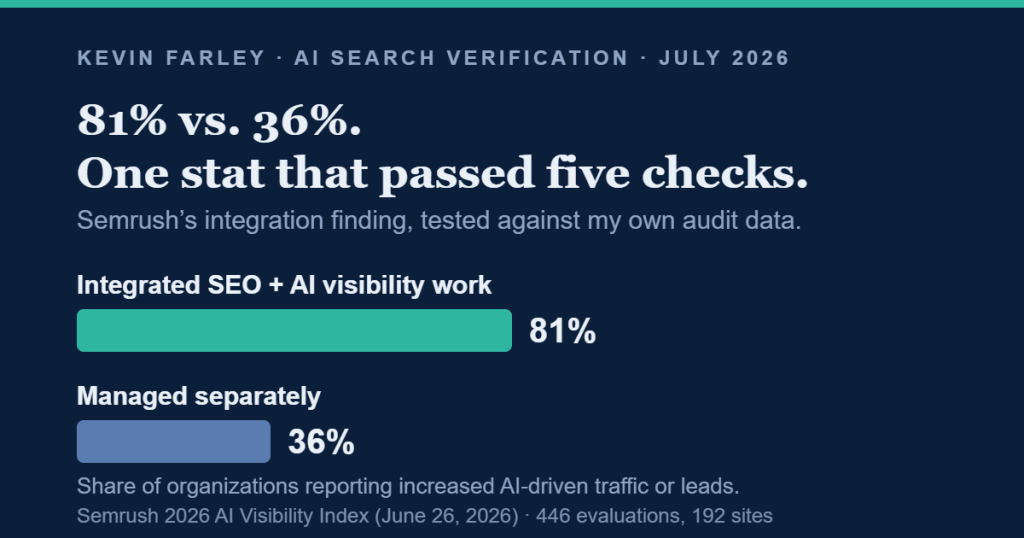
Semrush, Previsible, and Notified all dropped big AI search numbers this month. Here’s the five-check test before I believe any of them.

The Agentic Readiness Index scores how prepared an institution is for AI agents that act on behalf of a user, not just answer questions about it. It measures six dimensions, each on a 0 to 100 scale, and rolls them into a single readiness score. Visibility readiness asks whether an AI can find and describe

SEO gets you ranked in a list of links. AEO gets your content pulled out as a direct answer. GEO gets your brand named and cited inside an AI-generated answer. They overlap, but they are not the same job, and the shift matters for how you invest. SEO: ranking in the list Search engine optimization

A plain-English glossary of the terms behind AI visibility for financial institutions. If you are new to how AI decides what to recommend, start here. AI visibility How discoverable and accurately represented your brand is inside AI assistants like ChatGPT, Gemini, and Perplexity. High AI visibility means the assistant can find you, understand what you

Generative Engine Optimization (GEO) is the practice of structuring your content and data so that AI assistants like ChatGPT, Gemini, and Perplexity can find, understand, and cite your brand when they answer a question. If SEO is about ranking in a list of links, GEO is about being the answer. What GEO actually is AI
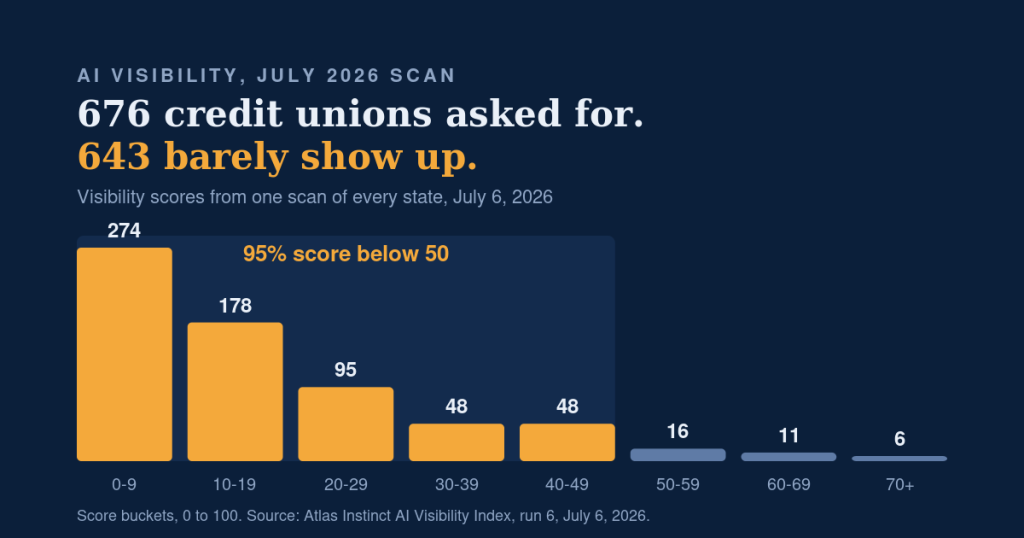
I asked an AI model where to bank in all 50 states and scored the 676 credit unions that came back. The national average was 18.1 out of 100, more than 95 percent landed below 50, and the two largest credit unions in the country both got beaten in their own backyards. I did not